
Ask the Bridle Fitter: How Should a Hackamore Fit?
Posted by Carolyn Vance, Master Bridle Fitter & Equine Ergonomist on Jul 17th 2026
My horse seems happier without a bit, so I'm thinking about trying a hackamore. But where is it actually supposed to sit on the nose? How tight should it be? And how do I keep it from shifting or getting dangerously close to my horse's eye? — Curious About Going Bitless
Dear Curious About Going Bitless,
You’re thinking about taking the bit out of your horse’s mouth. Maybe your horse has a sensitive tongue, a shallow palate, or perhaps you’re just looking for a softer, more intuitive connection. Whatever your reason, a hackamore is often the first alternative riders look toward. But before you unbuckle that bitted bridle, let’s sit down and talk about what "bitless" actually means and how to get the fit exactly right.
I see it all the time in my fitting practice: a rider wants to do right by their horse, so they buy a hackamore, drop it onto the headstall, and assume that because there is no metal in the mouth, it is inherently gentle. I hate to burst the bubble early, but bitless does not automatically mean pressure-free. A hackamore transfers control to some of the most sensitive real estate on a horse’s head: the nasal bone, the jaw, and the delicate facial nerves.When fitted correctly, it is a beautifully communicative piece ofequipment. When fitted incorrectly, it can be just as severe if not more than a traditional bit.
If you're ready to make the shift, here is exactly how we ensure your new hackamore is safe, functional, and comfortable for your partner.
Finding the perfect fit:
1. The Height Placement
This is the absolute non-negotiable step of fitting any hackamore, whether it is a mechanical version with metal shanks or a traditional rawhide bosal. You must find the precise sweet spot on the horse's nose.Slide your fingers down your horse’s face. You’ll feel the heavy, solid nasal bone, but as you get closer to the nostrils, that bone tapers off into fragile, thin cartilage. If you place a hackamore too low, it sits right on top of that delicate cartilage. A sharp pull on the reins here can restrict your horse's breathing, cause
extreme pain, or in worst-case scenarios, fracture the nasal bone.Conversely, if you hang it too high, the noseband will rub against the prominent, sharp cheekbones (the zygomatic ridge),pinching the skin and compressing major facial nerves.
The Fitter’s Rule of Thumb: Find the bottom of your horse's prominent cheekbone. Measure exactly two finger-widths down from that ridge. That is where the top of your hackamore's noseband should rest. This ensures it sits squarely on the stable, solid portion of the nasal bone.
2. The Two-Finger Rule for Tightness
A hackamore operates entirely on a system of "action and release" For the horse to understand your cues, there must be a stark, crystal-clear contrast between when the reins are engaged and when they are completely loose.If the noseband is buckled too snugly against the face when the reins are slack, your horse experiences constant, ambient pressure. Imagine someone lightly but continuously tapping you on the nose all day long. Eventually, the horse will either tune it out becoming "dead" to the cue or become deeply frustrated.When your reins are completely slack, you should easily be able to slide two fingers flat between the noseband and your horse’s skin. This guarantees that when you let go of the reins, the pressure drops instantly to zero therefore giving your horse their well-deserved reward for responding.
3. Calibrating the Curb Strap Angle
If you choose a long-shanked hackamore or one with short shanks, it relies on leverage. Hence the reason that Nunn Finer offers an array of different shank lengths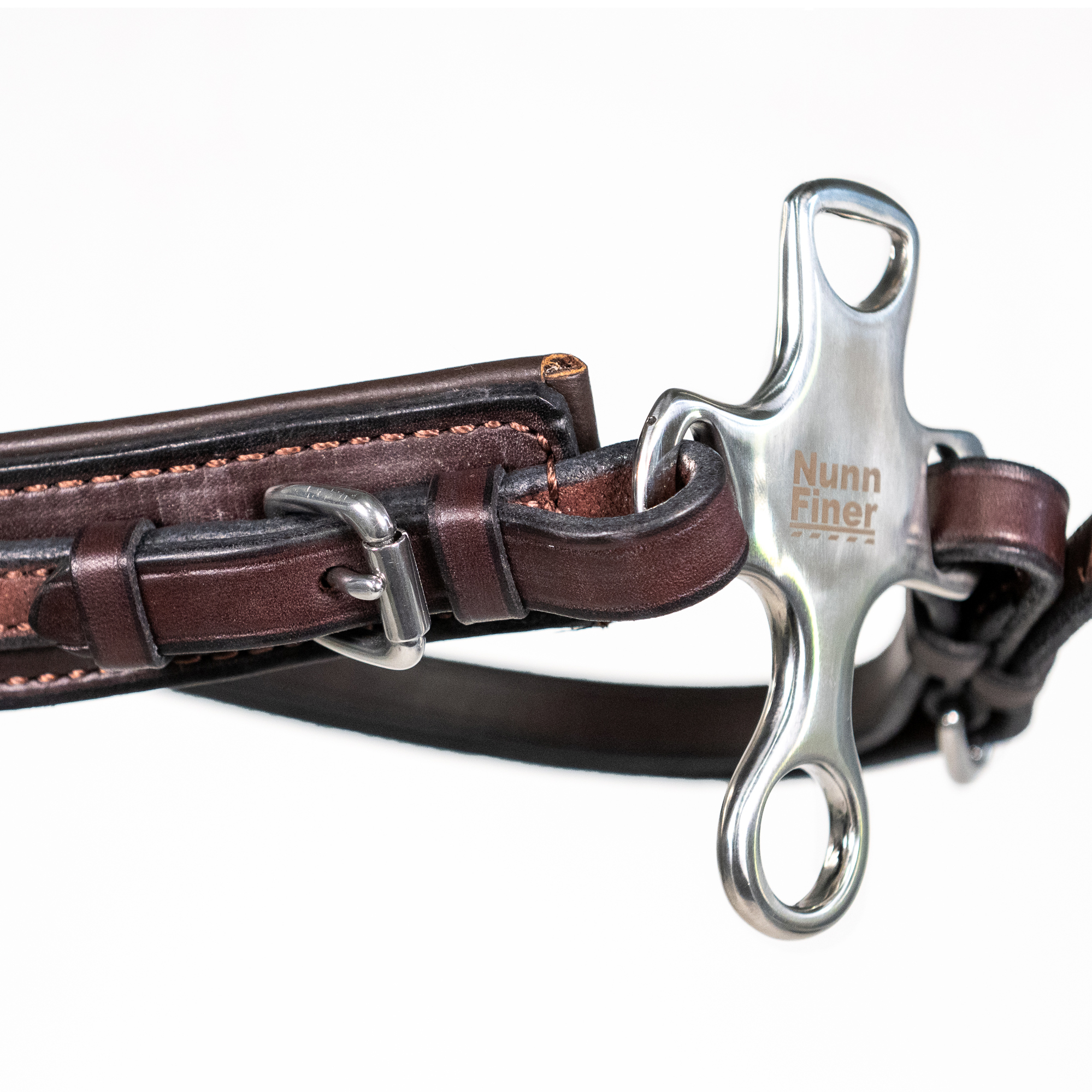
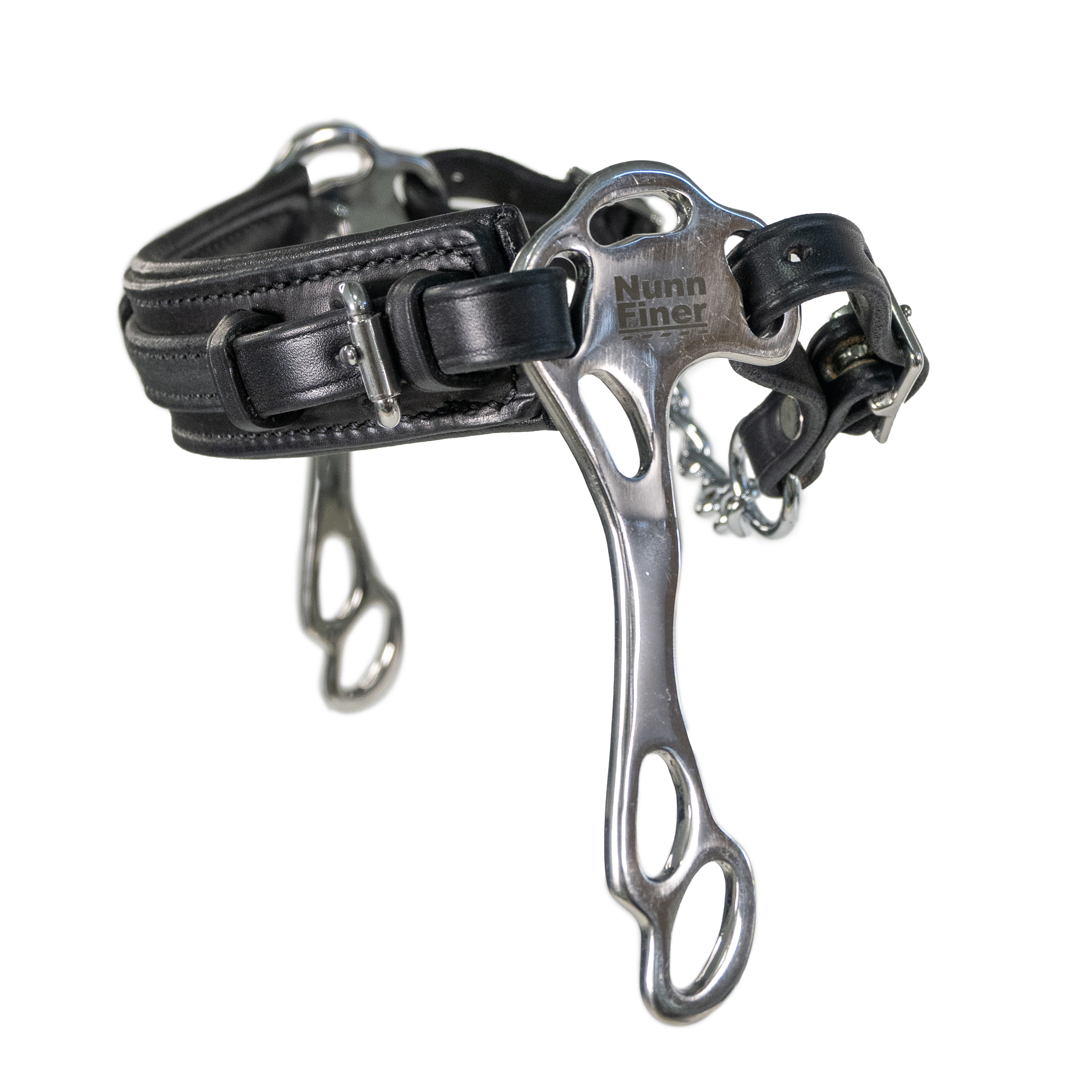
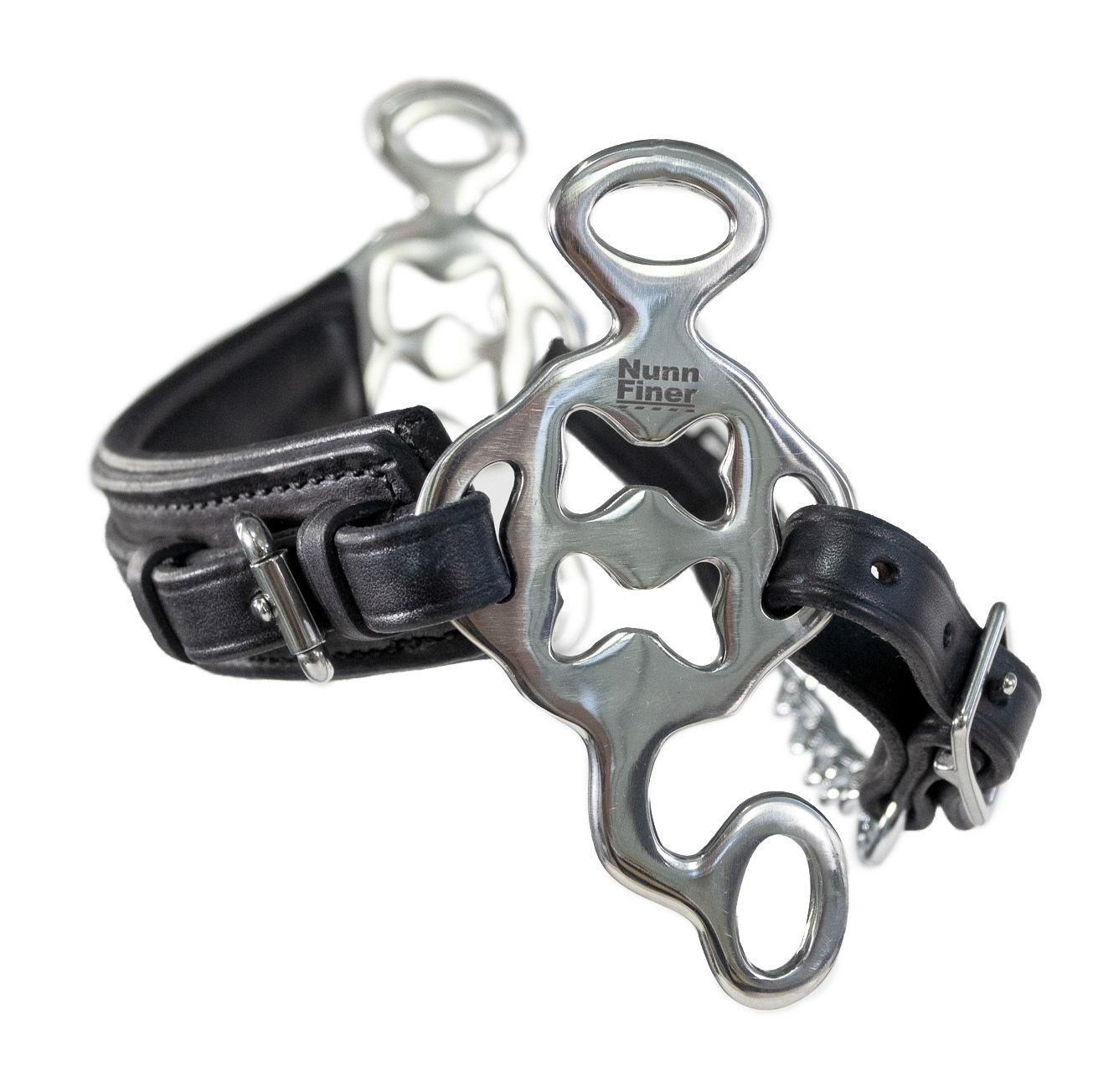
When you pull back on the reins, the shanks rotate, bringing the noseband down and drawing the curb strap up against the lower jaw. The adjustment of that curb strap dictates the entire behavior of the bridle. At Nunn Finer we offer a leather curb strap for curb pressure and a chain curb for more pressure.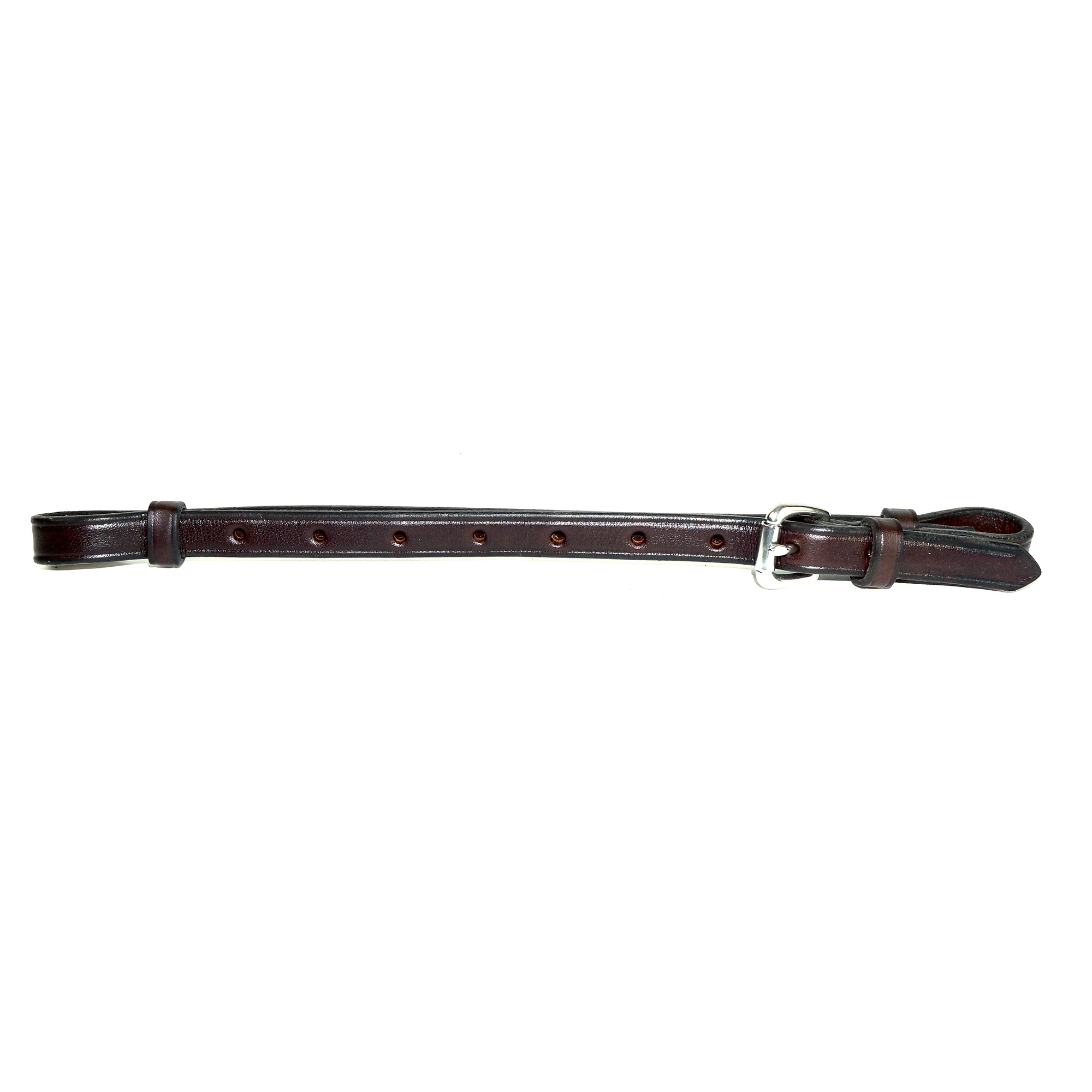
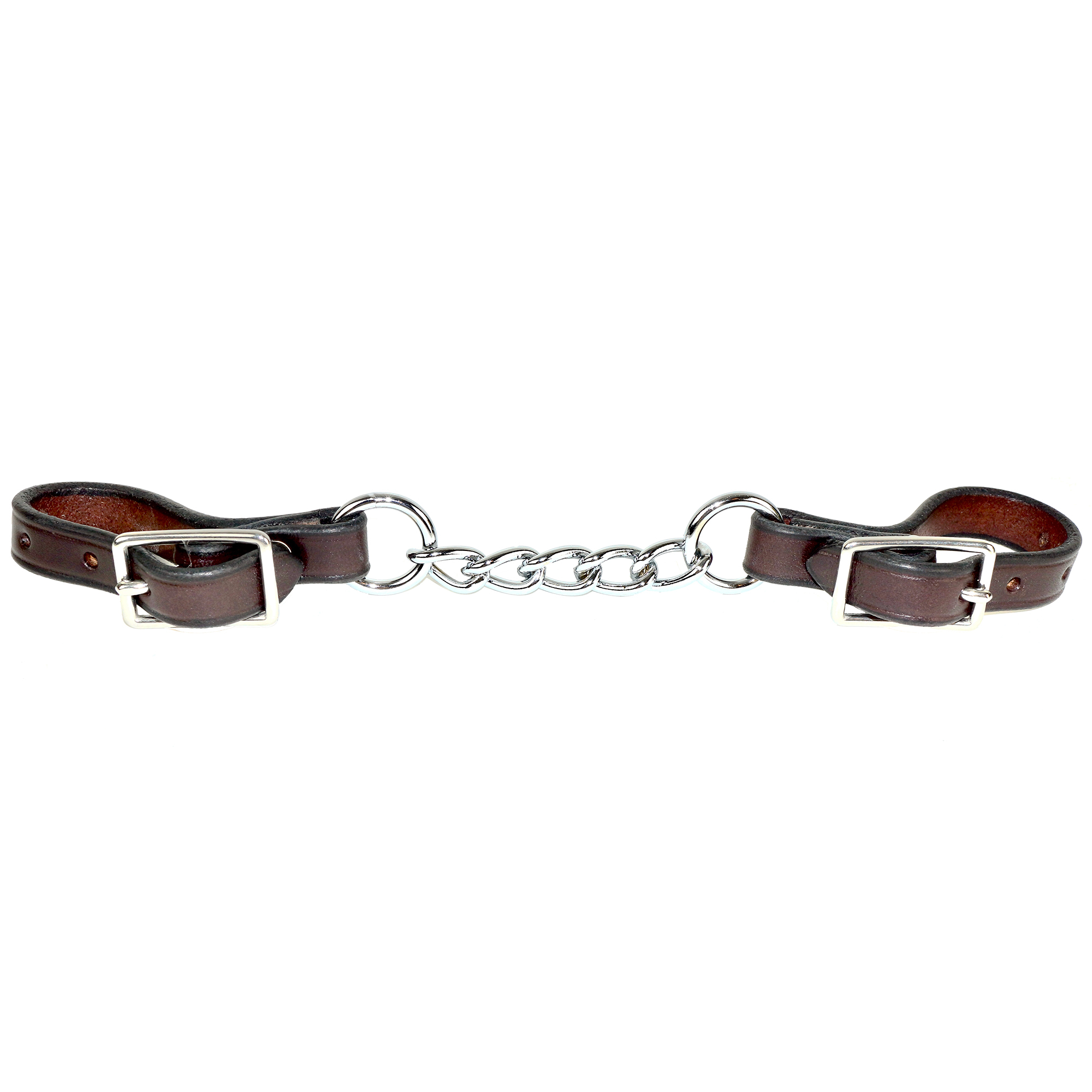
If your curb is too tight, the slightest wiggle of your hands will cause immediate, harsh pressure. If it is too loose, the shanks will rotate all the way back toward your horse's neck without ever actually engaging, leaving you with zero steering or stopping power. When you pick up the reins, the shanks should ideally rotate to a 45-degree angle before the curb strap fully makes contact with the jaw. This gives the horse a clear warning window that a cue is coming before the leverage engages.
A common issue with using a hackamore is rotation issues. This might occur where the cheek piece will rotate towards your horses’ eye. Without saying this could be harmful as well as not as lack of proper steering and stopping. We have solved this issue with our Nunn Finer Hackamore Stabilizer. Attaching to
the cheeks on both sides of your existing bridle our stabilizer fits nicely under your horses’ jowls and prevents the issue with the problem.
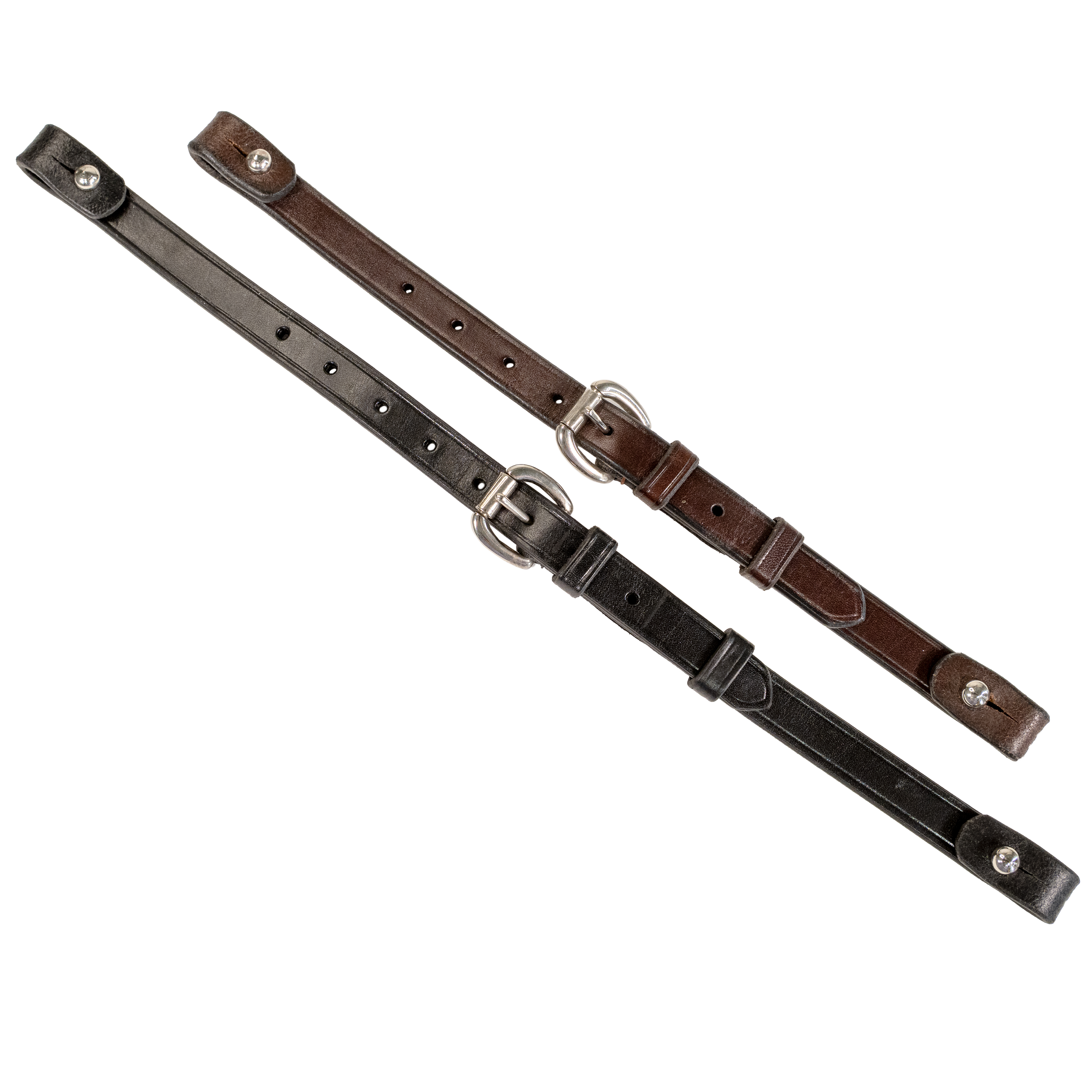
Nunn Finer Hackamore Stabilizer
Before You Ride: A Quick Homework Assignment
Before you mount up, put the new setup on and stand at your horse’s shoulder. Take a look at how it behaves dynamically.Pick up the rein to simulate a cue. Does the noseband stay stable, or does it twist wildly and poke the opposite eye? When you release your hand, does the hackamore instantly drop
away from the face, or does it stay stuck?
Listen to your horse. If they are tossing their head, rubbing their nose against their leg, or opening their mouth as if trying to escape a bit, something is pinching or pressing where it shouldn't.
Going bitless can be an incredibly rewarding transition that deepens your communication, but it requires a discerning eye. Take your time, measure carefully, and let your horse tell you how it feels.